

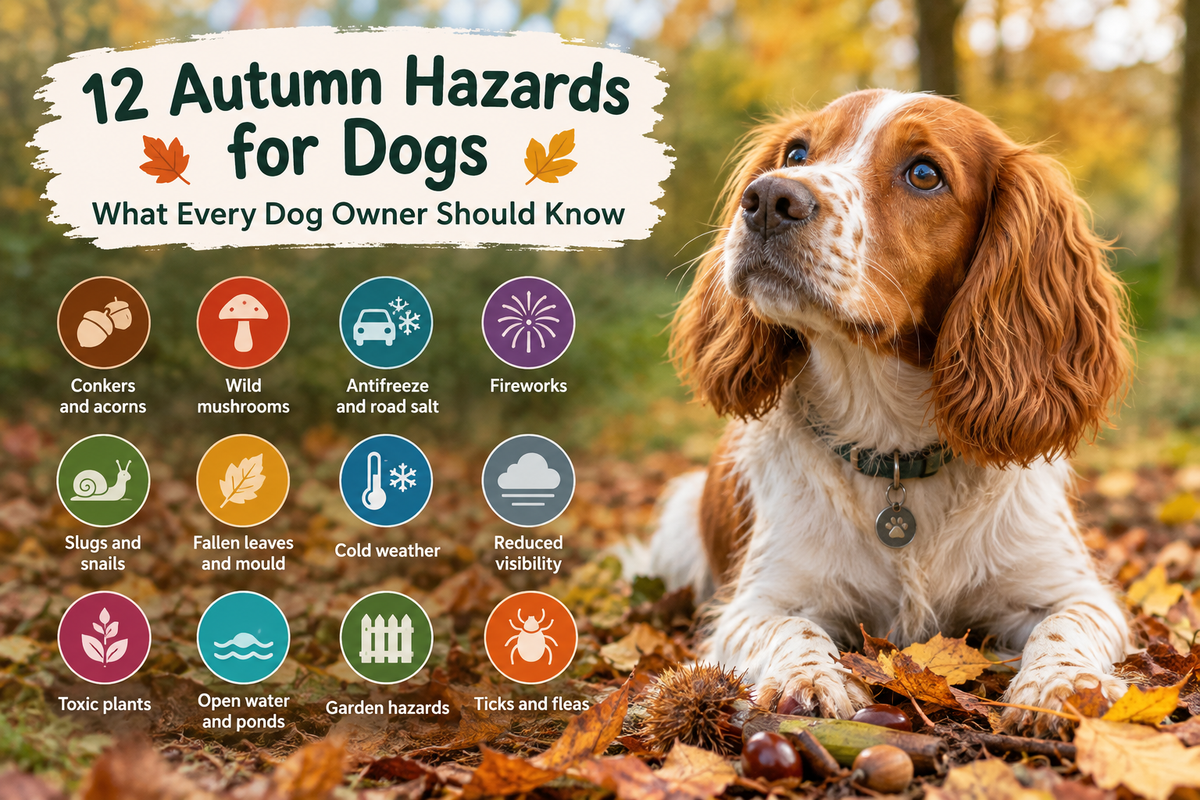
Autumn brings crisp mornings, colourful leaves, longer nights and plenty of opportunities to enjoy the outdoors with your dog. But the change in season also brings a few hazards that every dog owner should be aware of.
From conkers and mushrooms on the ground to fireworks, colder weather and reduced visibility, some of the things we associate with autumn can pose a risk to curious dogs.
That doesn't mean you need to avoid autumn adventures altogether. With a little extra awareness and preparation, you can continue enjoying plenty of safe and enriching walks together.
Here are 12 autumn hazards to look out for when you're out and about with your dog.
1. Conkers and acorns
A carpet of fallen conkers and acorns is one of the unmistakable signs of autumn. Unfortunately, they aren't suitable toys or snacks for dogs.
Conkers contain aesculin, which can make dogs unwell if eaten. They can also present a choking risk or cause a gastrointestinal obstruction if swallowed.
Acorns contain tannins, which can cause digestive upset when eaten. Consuming larger quantities can result in more serious problems, while whole acorns can also become lodged in the digestive tract.
Some dogs love picking up and carrying conkers or acorns, so keep a close eye on what your dog is investigating during autumn walks. If they're particularly interested in them, redirect them towards a safe toy or treat instead.
2. Wild mushrooms
Autumn is prime mushroom-growing season, and you'll often spot fungi appearing in woodland, parks and grassy areas.
The problem is that some wild mushrooms are poisonous to dogs, while others aren't. Identifying them correctly can be difficult, so it's safest not to let your dog eat any wild mushroom they find.
Depending on the species, poisoning can cause anything from stomach upset to neurological symptoms and potentially life-threatening illness. Some effects may also be delayed.
If you think your dog has eaten a wild mushroom, contact your vet promptly rather than waiting for symptoms to appear. If it is safe to do so, take a photograph of the mushroom or make a note of where you found it, as this may help your vet identify the potential risk.
3. Antifreeze and road salt
As temperatures fall, antifreeze becomes a particular concern.
Ethylene glycol, found in many traditional antifreeze products, is extremely toxic to dogs. Even relatively small amounts can cause severe poisoning and kidney damage. Spills and leaks around parked cars can be particularly difficult to spot.
Dogs may also encounter rock salt or grit used on roads and pavements during cold weather. Ingesting large amounts can cause illness, while salt residue on paws can also be swallowed when your dog licks themselves.
Try to prevent your dog from drinking from puddles around parked vehicles, and wipe their paws after walks if you've been somewhere that has been gritted.
If you suspect your dog has swallowed antifreeze or a significant amount of road salt, contact a vet immediately. Don't wait for symptoms to develop.
4. Fireworks
For many dogs, autumn means fireworks season.
The sudden bangs, flashes and unfamiliar smells can be frightening, particularly for dogs that are already nervous about loud noises.
Before fireworks are expected, create a comfortable area inside your home where your dog can retreat. Close windows and curtains, put on the television or some music to help mask the noise, and make sure doors and gates are secure.
You can also offer a favourite chew, food puzzle or other enrichment activity if your dog is willing to engage with it.
Never force a frightened dog to interact or punish them for showing signs of fear. If your dog becomes extremely distressed around fireworks, speak to your vet well in advance about suitable ways of managing their anxiety.
Remember that firework debris can remain hazardous after the display has finished. Check your garden and walking areas for discarded fireworks before allowing your dog to explore.
5. Slugs and snails
Slugs and snails may seem harmless, but they can carry lungworm, a parasite that can cause serious disease in dogs.
Dogs can become infected by eating slugs or snails, including those found in gardens, parks and other outdoor areas. They may also encounter them accidentally while chewing grass or investigating vegetation.
Ask your vet about an appropriate parasite-prevention programme for your dog. Different products protect against different parasites, so it's important to use a treatment suitable for your dog's individual circumstances.
Even with preventative treatment, discourage your dog from eating slugs and snails wherever possible.
6. Fallen fruit
Autumn brings plenty of fallen fruit, particularly in parks, gardens and woodland.
Some fruits, seeds and stones can be harmful to dogs, while rotting or mouldy fruit can pose additional risks. Fallen fruit may also ferment as it decomposes, potentially producing alcohol.
Keep your dog away from piles of decaying fruit and be particularly careful around fruit trees.
If you'd like to give your dog fruit as an occasional treat, stick to dog-safe fruits prepared appropriately and remove any potentially hazardous stones, seeds or cores.
7. Fleas, ticks and harvest mites
Cooler temperatures don't necessarily mean the end of parasites.
Fleas can survive in warm indoor environments throughout the year, while ticks can remain active during much of autumn. Dogs exploring long grass, woodland and vegetation may also encounter harvest mites.
Ticks can transmit diseases, and bites from mites and other parasites can cause irritation and itching.
After walks, particularly in areas with long grass or dense vegetation, check your dog carefully. Pay particular attention to areas such as the ears, face, neck, between the toes and around the legs.
Regular parasite prevention can also help reduce the risk. Speak to your vet about which products are appropriate for your dog and your local parasite risks.
8. Rodent poison
As the weather gets colder, rodents may seek shelter in sheds, garages, homes and other buildings. This can lead some households to use rodenticides.
Unfortunately, rodent poison can also be highly dangerous to dogs.
Never leave bait somewhere your dog can access it, and remember that a dog may also be exposed by eating a poisoned rodent.
If you think your dog has eaten rodenticide or a poisoned animal, contact your vet immediately. Keep the packaging, if available, as the active ingredient can affect the treatment your dog needs.
9. Halloween
Halloween can be an exciting time for people but a confusing one for dogs.
Costumes, decorations, doorbells, visitors and children moving around unexpectedly can all be stressful. Some dogs may become frightened by unfamiliar people or objects.
There is also the obvious food risk. Chocolate, sweets, certain sweeteners and discarded food wrappers can all be dangerous to dogs.
Keep Halloween treats well out of reach and ask children not to feed them to your dog.
If your dog finds visitors stressful, give them access to a quiet room or safe space away from the front door. Make sure they cannot escape when the door is repeatedly opened.
And don't forget to check the garden and pavements for dropped sweets or wrappers after Halloween.
10. Leaf piles and hidden hazards
Few things look more inviting than a huge pile of autumn leaves — but what's underneath them may be less appealing.
Leaf piles can conceal sticks, sharp objects, broken glass, litter, dog mess, insects and other hazards. Damp leaves can also provide an environment where mould develops.
If the leaves are in a public place, you simply won't know what's hidden underneath.
A freshly gathered pile of leaves in your own secure garden is a different matter, but even then, check the area regularly and remove anything that could injure or be swallowed by your dog.
11. Darker evenings and poor visibility
The days get noticeably shorter during autumn, meaning many dog walks take place around dusk or in darkness.
Reduced visibility can make it harder for you to see your dog and harder for other people, cyclists and drivers to see you.
Reflective or illuminated collars, harnesses and leads can make your dog much easier to spot. A torch or head torch can also help you identify hazards on the ground.
If you're walking near roads or somewhere unfamiliar, take extra care and consider keeping your dog on a lead.
Even dogs with excellent recall can become difficult to locate in the dark.
12. Colder and wetter weather
Dogs don't all respond to cold weather in the same way.
Puppies, older dogs, smaller dogs and dogs with thin coats may feel the cold more quickly, while some dogs with thick coats are better equipped for lower temperatures.
Wet weather can also make dogs colder, particularly if they remain damp for a long period.
After a wet or chilly walk, dry your dog thoroughly and provide a warm, comfortable place for them to rest. A suitable coat may be helpful for some dogs, but it should fit properly and never restrict normal movement.
Watch your dog rather than relying solely on the temperature outside. If they're shivering, repeatedly lifting their paws, reluctant to continue walking or showing other signs that they're uncomfortable, it's time to head home.
Final thoughts
Autumn is a wonderful season to spend time outdoors with your dog, and these potential hazards shouldn't stop you from enjoying it.
The key is awareness rather than worry. Keep an eye on what your dog is eating and investigating, check them after walks, take sensible precautions around fireworks and darkness, and make sure your home and garden are safe.
It's also worth having your vet's contact details readily available and knowing where your nearest emergency veterinary service is, particularly during evenings and weekends.
With a little preparation, you and your four-legged friend can enjoy everything autumn has to offer — from crunchy leaves and woodland walks to cosy evenings at home — while keeping safety firmly in mind.


