

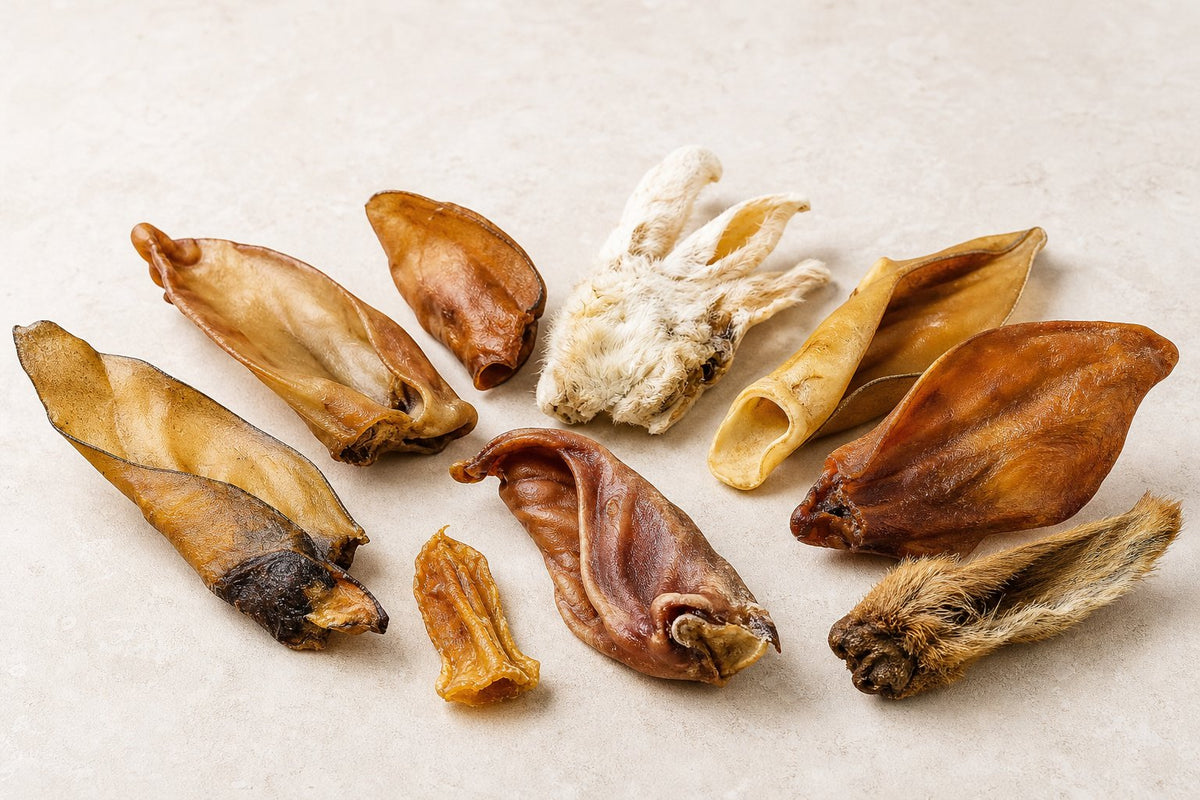
Ear chews can be a very sensible option for puppies and smaller dogs, provided you choose the right type and introduce them sensibly. They are natural, air-dried chews made from cartilage rather than bone, so they tend to be a softer, more manageable pick than many harder chews. For first-time buyers, that usually makes the decision simpler rather than more complicated.
Why ear chews are often a good fit
Many dogs enjoy ears because they are flavourful, natural and satisfying to gnaw on. For puppies in particular, that chew action can be useful when they are teething and looking for something to occupy their mouth. The All Ears Chomper Box® brings together a variety of ears, so it gives owners a few options to work with rather than one single chew style.
That variety matters if you are not yet sure what your dog prefers. Some dogs do better with a longer-lasting ear, while others are happier with a lighter chew. A mixed box gives you room to judge what suits your dog without committing to one type straight away.
What makes ears easier to digest than bone-based chews?
The key difference is that ears are cartilage, not bone. That makes them a more natural, easier-to-manage chew for many dogs than harder, bone-based alternatives. The supplied product information also describes air-dried ears as easy to digest, which is one reason they are often viewed as a straightforward choice for owners who want something natural and less heavy-going.
It is still worth remembering that “easy to digest” does not mean “leave unsupervised”. Any chew can pose a choking risk if a dog bites off a large piece, so the practical benefit comes from choosing the right size, giving it at the right time and watching your dog while they chew.
Which dogs are most likely to suit ear chews?
Ear chews are especially useful for puppies in need of a chew, and the supplied information says they are suitable for puppies aged 10 weeks plus. They are also a good match for small dogs and cautious chewers who may struggle with very hard treats.
A simple way to think about suitability is this:
- Puppies: a softer natural chew can be easier to manage during teething.
- Small dogs: ears may feel less overwhelming than larger or denser chews.
- Careful chewers: a natural ear can offer interest without the hardness of a bone-style product.
- Dogs needing variety: a box with different ear types helps you test what your dog prefers.
The important caveat is that all dogs are unique. A chew that suits one small dog may be too rich, too long-lasting or simply not interesting enough for another.
How to choose between different ear types
Different ears are not all the same, so it helps to think about the chew in practical terms rather than just the name on the pack. The supplied product details point to a few useful differences.
| Ear type | What it may suit |
|---|---|
| Buffalo ear | Hypoallergenic, high in protein, low in fat, long-lasting |
| Venison ear | Hypoallergenic, long-lasting, good dental chew |
| Pig ear | Long-lasting, good dental chew |
| Rabbit ear | Hypoallergenic, high in protein, low in fat |
| Cow ear | High in protein, low in fat, long-lasting |
| Goat ear | Hypoallergenic, low in fat and odour |
If your dog is new to chews, odour and chew time can matter as much as flavour. A lower-odour option may be easier to live with indoors, while a longer-lasting chew may suit dogs who are more focused and persistent. If you want to compare several options without buying them separately, a mixed box is often the most practical starting point.
Flavour, odour and chew time: what should you prioritise?
For many owners, the best chew is the one the dog will actually use calmly. Flavour is usually the first attraction, but odour and chew time affect the experience at home. The supplied information describes these ears as low odour and air-dried, which makes them a more relaxed choice for indoor use than many stronger-smelling treats.
If your puppy is still learning how to settle with a chew, a less intense option can be easier to introduce. If your small dog is a determined chewer, a longer-lasting ear may give you better value and more focus. The right answer depends less on one “best” ear and more on how your dog chews in real life.
Safe way to introduce ear chews
Even with a natural chew, the first session should be calm and supervised. That is the safest way to see how your dog handles the size, texture and pace of chewing.
A sensible routine is:
- Offer the chew when your dog is settled.
- Stay nearby and watch how they bite and break it down.
- Remove the chew if it becomes small enough to swallow.
- Keep fresh water available.
- Choose a chew that matches your dog’s size and chewing style.
This is especially important for puppies, because they are still learning how to chew safely and may gulp pieces if they get too excited. Supervision is not a nice extra here. It is part of choosing a chew responsibly.
Why a mixed ear box can make sense for first-time buyers
If you are unsure where to begin, a box like the All Ears Chomper Box® gives you a simple way to compare different ear chews without overthinking it. It includes pigs’ ears, cow ear, buffalo ear, venison ear, rabbit ears, goat ear with fur, goat ear without fur and a hairy cow ear, so there is real variety in one place.
That makes it easier to spot patterns in your dog’s behaviour. You can see which chew they prefer, which lasts longest and which feels most manageable for them. For many owners, that is more helpful than trying to predict the perfect choice from the outset.
A calm, practical answer for puppies and small dogs
Ear chews can be a very good choice for puppies and small dogs when you want something natural, manageable and easy to try with care. The best results usually come from matching the chew to the dog, then watching how they get on.
If you are unsure, start with a mixed option, keep it supervised and look for the chew style your dog handles most comfortably. That approach is usually kinder for your dog and simpler for you.


