

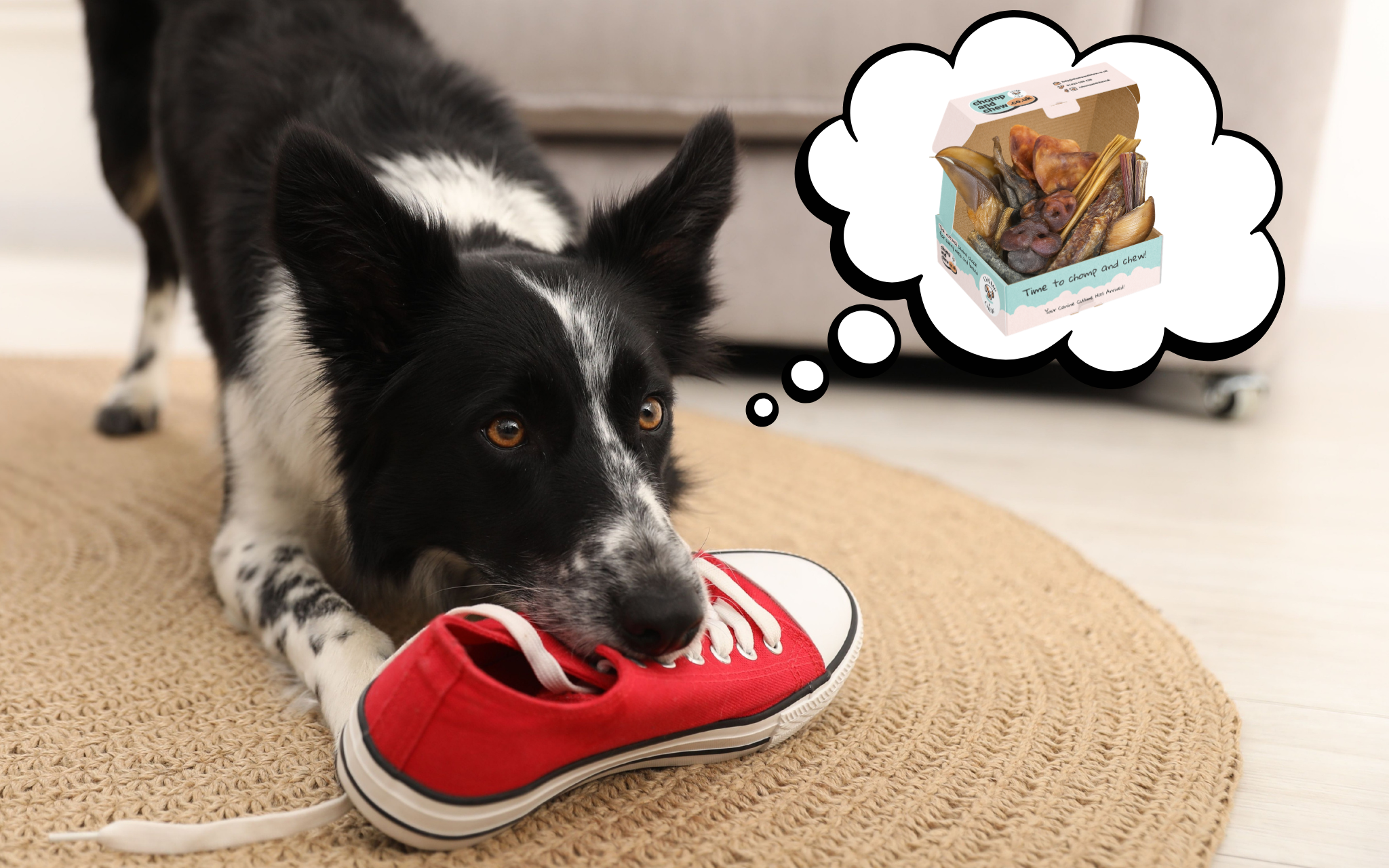
Chews can serve as delicious treats for dogs, but more importantly, they provide a necessary outlet for instinctive canine chewing behaviours. They’re also beneficial to dogs in various other ways, from supporting dental health to fighting boredom and beyond. A lack of healthy chews can therefore lead to both behavioural problems and health issues over time. This article breaks down four key signs that your dog may need more to chew.
1. Destructive or misplaced chewing
If your dog is acting out in certain ways, they may be trying to tell you they need more outlets for chewing. For example, if you find that your pooch has an affinity for gnawing on household items, furniture, or shoes, the likely cause is that they have no suitable alternative. The same applies to quickly destroying toys. Both puppies and adult dogs typically begin showing increased gnawing, licking, and/or chewing outbursts as a misdirected instinct when they don’t have a proper chewing outlet. Offering them a safe, healthy, natural chew means they get the benefits of a good chew session without ruining any of your belongings or furnishings.
2. Restlessness or difficulty settling
Does your dog struggle to settle, even when they’ve had plenty of exercise? If you find them consistently pacing, switching spots, and generally finding it difficult to relax, it could be that they’re feeling bored. This often comes from a lack of mental stimulation. While their body may have been worked sufficiently, their mind is still active and looking for more to do. Chews are excellent for breaking this boredom and serve as one of the simplest and healthiest forms of mental stimulation for dogs. Most pet parents see improvements in their dogs’ restless behaviour after implementing regular chew sessions into their routines.
3. Constant begging or food fixation
Most dogs love food, and certain breeds (*cough* Labrador Retrievers *cough*) have a particular affinity for all things edible. However, there is a difference between loving food and becoming completely fixated on it. In an effort to soothe overly food-focused pooches, some pet parents accidentally overfeed their dogs, which can lead to long-term health issues over time. If your dog never seems satisfied by their food, is always begging for some of yours, and short-lived treats don’t fill the gaps, it’s time to introduce long-lasting chews. This gives them a way to enjoy something tasty for an extended period without racking up unnecessary calories. Instead, they get the satisfaction they’re looking for both mentally and physically in a way that supports their overall health.
4. Dental build-up
Aside from behavioural issues, one of the key benefits of natural chews is the way they support canine dental health. While chews are not a cure for advanced dental disease and do not replace veterinary dental cleanings, they can help prevent common issues and even aid in reducing their severity. For example, chews can help prevent the buildup of plaque and tartar, and help scrape it off once it begins to form. If your dog is showing signs of these issues, whether visually or via some particularly stinky breath, chews may be beneficial in supporting their ongoing dental health. However, remember to also have your dog’s dental health checked by a vet regularly, especially if you suspect dental problems. Chews are simply a preventative measure and daily support tool. To help maintain your dog’s dental health, from their teeth to their gums to the strength of their jaw, it’s useful to include natural chews as part of their routine.
Choosing the right chew
Not all chews are created equally. First, make sure you’re choosing something completely natural without any preservatives or other artificial additives. Single-ingredient chews, like those found in our Chomper Boxes® and Chomper Bags, are ideal. Next, find a chew that suits your dog’s size and jaw strength, as some are much larger and tougher than others. It’s also advisable to rotate between different chews to maintain your dog’s interest. Regardless of what you choose, it’s important that you always make sure to provide fresh drinking water and supervise your dog while they’re chewing.
Final thoughts
The key to remember is that chewing is a natural need for your dog, not a bonus activity. So, while it may seem like a treat, it’s also something they require for their overall wellbeing. Having the right outlet for chewing instincts can improve your dog’s behaviour and support both their mental and physical health. When introducing chews to your dog’s routine, it’s important to make sure they’re healthy, natural, and free from additives, as your pooch deserves only the best.


