

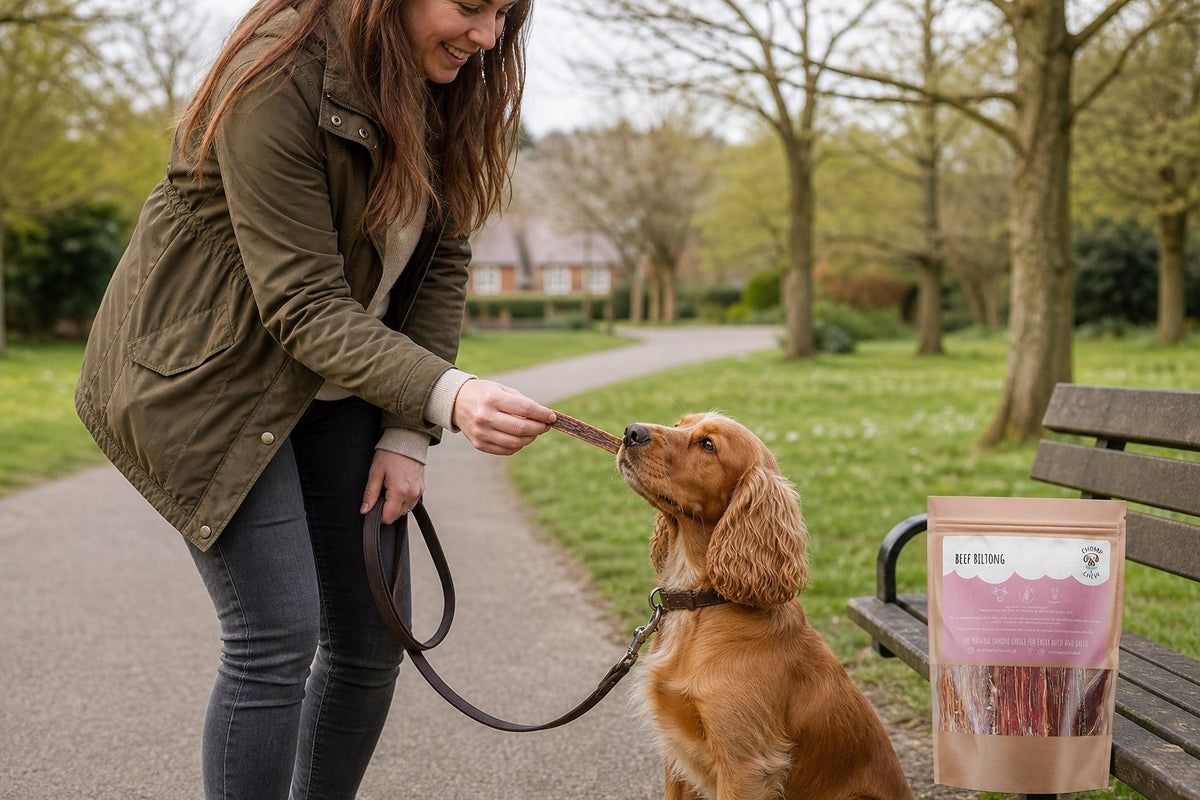
If you are trying to keep treats lighter without giving up on something your dog can still enjoy, a beef biltong-style chew can be a sensible option. The main appeal is simple. It is a natural, air-dried snack that stays closer to a plain, easy-to-understand treat than many richer chews, which makes it worth a look for owners who want to be more careful about fat content.
What a low-fat chew means in everyday feeding terms
In practical terms, a low-fat chew is just a treat that fits more comfortably into a lighter feeding routine. That might matter if your dog gets treats often, if you are keeping an eye on what goes into their bowl, or if you want a snack that feels less heavy than a richer chew.
A low-fat option is not a magic answer, and it is not the right choice for every dog. It is simply a sensible category to look at when you want a treat that is easier to fit into an everyday routine without adding unnecessary extras.
For owners who prefer a more natural approach, the attraction is usually clarity. You know what the chew is, how it is made, and why it has been chosen. That can be reassuring when you are trying to keep feeding choices straightforward.
Why some owners look for a lighter treat
People usually start comparing low-fat chews when their dog needs a gentler treat approach or when they want something less rich than the chews they have used before. Sometimes it is about routine. Sometimes it is about being more selective with snacks. Sometimes it is simply about wanting a premium option that still feels easy to understand.
A lighter treat can also suit owners who prefer fewer moving parts in a product. No complicated recipe. No long list of extras. Just a natural chew that does one job well.
That is where a beef biltong-style snack fits neatly into the conversation. It gives you a chew that feels more like a straightforward protein snack than a heavily processed treat.
How beef biltong differs from more typical chewy treats
Beef biltong is air-dried, which is part of what sets it apart. The slow drying process is used to preserve the flavour and goodness of the raw material, while keeping the snack simple in form.
Our Beef Biltong is made from premium beef and is completely natural, with no flavourings, additives or preservatives. It is also high in protein and low in fat, which is why it can work for owners who want a lighter chew.
Here is the simplest way to think about the difference:
| Beef biltong-style snack | More typical rich chew |
|---|---|
| Air-dried | Often heavier or richer |
| Natural and simple | May feel less straightforward |
| Low fat | Not always a lighter choice |
| Easy to understand | Can be less predictable for some owners |
The benefit is not only in what it contains, but in what it leaves out. For many owners, that makes it easier to choose with confidence.
When a low-fat chew may be a better fit for a dog
A low-fat chew can make sense when you want a treat that is kinder to a lighter feeding routine and still feels like a proper snack. It may also be a practical choice if you prefer to keep treats as plain and natural as possible.
This kind of chew can be especially useful for dogs that need a more cautious approach to richer treats. Our Beef Biltong is also suitable for dogs on strict low-fat diets, including those with pancreatitis., but it is still important to judge suitability for the individual dog and, if needed, take advice from your vet.
A few signs that a low-fat chew may suit your situation:
- You want a treat with a lower fat content.
- You prefer natural snacks with no unnecessary extras.
- You are looking for a chew that feels easy to understand.
- Your dog does better with a gentler treat approach.
The point is not to chase the “lightest” option at all costs. It is to choose a chew that matches your dog’s needs and your own feeding preferences.
How to introduce a new chew and portion it sensibly
Whenever you introduce a new treat, it is best to keep things steady and simple. Start with a small amount and see how your dog gets on. If they enjoy it and it suits them, you can build from there.
Our Beef Biltong is suitable for dogs aged 12 weeks and over, and the guidance we have for daily intake is straightforward:
- Small dogs such as Dachshunds: 1 to 2 strips a day
- Medium dogs such as Spaniels: 2 to 3 strips a day
- Large dogs such as Labradors: 3 to 4 strips a day
It also helps to supervise your dog while they chew and to provide fresh water. Keep the product somewhere cool and dry, out of direct sunlight, so it stays in good condition.
If you are comparing options, the decision usually comes down to three questions:
- Is your dog suited to a low-fat treat?
- Do you want something natural and simple?
- Does the portion size fit your dog’s daily routine?
If the answer to all three is yes, a beef biltong-style snack may be a good fit.
A sensible choice when you want less fuss
A low-fat dog chew makes the most sense when you want a treat that is simple, natural and easier to fit into a careful feeding routine. Beef biltong is one of the clearer options in that space because it is air-dried, low in fat and straightforward to understand.
That does not make it the right answer for every dog, but it does make it a practical one to consider when you want a lighter chew without unnecessary extras. If you are unsure, choose based on your own dog’s needs and ask for advice where needed.


