

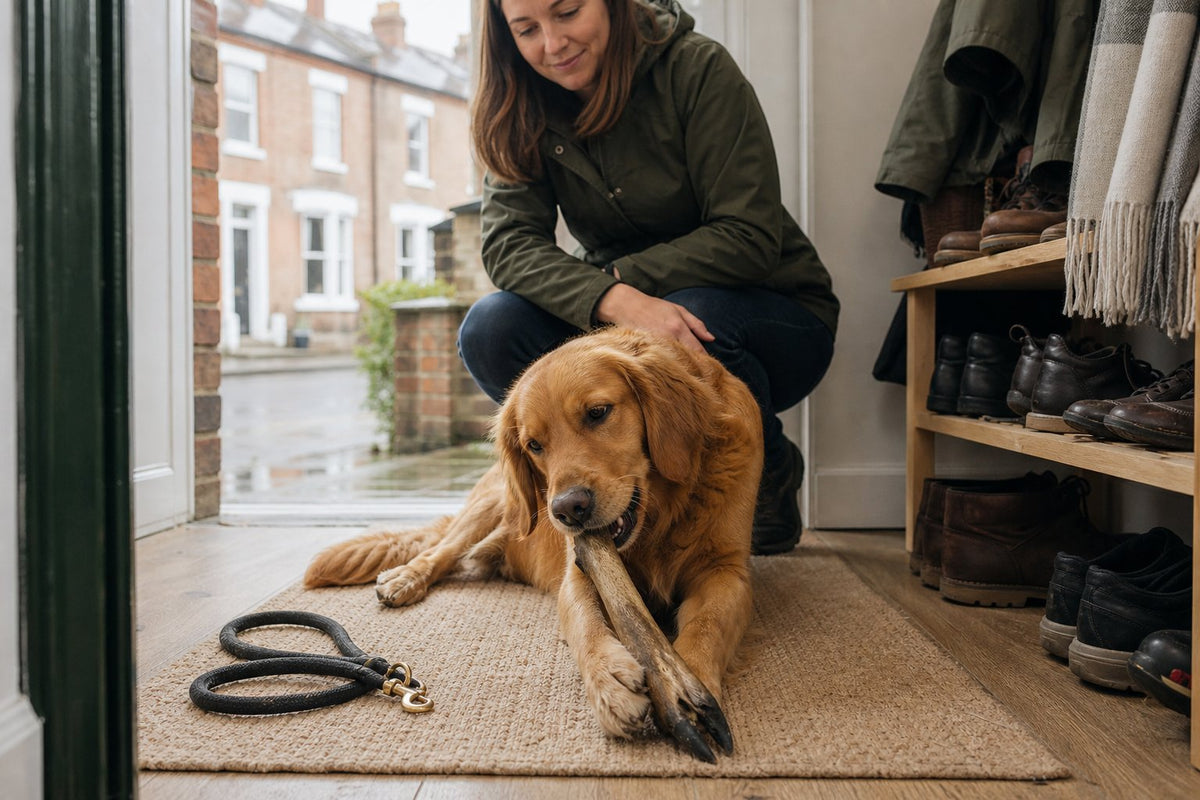
If your dog does better with simpler ingredients, the safest starting point is usually a chew with a single protein source, no extras, and a clear sourcing story. That gives you a more predictable routine, especially when you are trying to avoid a long ingredient list or a mix of proteins that can make things harder to judge.
Why owners look for gentler chew options
Many owners are not looking for a special claim. They are looking for something straightforward. A dog that seems fussy, has a sensitive tummy, or does better on a narrower range of ingredients often suits a simpler chew routine.
That is where natural, air-dried chews can be useful. They keep the focus on one ingredient or one main protein, rather than adding flavourings, fillers or a long list of extras. For owners who want to keep things easy to track, that simplicity matters just as much as the chew itself.
A natural chew also gives you a more practical way to notice what your dog tolerates well. When the ingredient list stays short, it is easier to spot whether a new chew suits them or not.
What novel protein and single-source protein can mean in practice
“Novel protein” and “single-source protein” are both useful phrases, but they do different jobs.
A novel protein is simply a protein your dog does not get very often. A single-source protein means the chew comes from one main animal source, which keeps the recipe straightforward. For sensitive dogs, that can be a helpful place to begin because there is less going on in the chew itself.
Our Large Deer Leg with Fur fits that style of thinking. It is described as a single source protein, air-dried, and suitable for dogs with sensitivities or allergies. It is also responsibly sourced from Europe, which suits owners who want a more considered choice as well as a simpler one.
A few things still matter here. A chew can be simple without being suitable for every dog, and a protein that works well for one dog may not suit another. The useful question is not whether a chew sounds gentle in general. It is whether it fits your own dog’s size, age, chewing style and usual diet.
When a long-lasting chew may suit a sensitive dog
A longer-lasting chew can be a good option when you want to keep a dog occupied without moving through lots of different snack types. That can suit dogs who like to settle with a chew and work at it slowly.
Deer legs are excellent, long-lasting chews, with the large version suited to medium to large and giant breed dogs aged over 6 months. The air-drying process helps to preserve the natural minerals in the product and avoid the bone becoming hard like glass.
There are still limits to keep in mind:
- It is not recommended for small breeds or young puppies.
- Extra caution is needed for dogs that like to swallow things.
- It should not be left for longer than 30 minute sittings.
- If it becomes too small or breaks into smaller pieces, remove it straight away.
- Fresh water should always be available.
If your dog has never had a deer leg before, they may take a while to get started on it. That is normal with some dogs. It is sensible to stay nearby while they work it out, rather than expecting an instant chew session.
How to think about sourcing and ingredient simplicity
For sensitive dogs, sourcing is part of the decision, not just a background detail. Owners often want to know where a chew comes from, how it has been prepared, and whether the ingredient list stays as short as possible.
That is why air-dried, responsibly sourced chews have appeal. Air-drying is presented here as a way of keeping the product natural and preserving its original qualities without turning it into something heavily processed. For owners who prefer a cleaner routine, that is often the point.
The simplest way to judge a chew is to ask a few plain questions:
- Is it a single source protein?
- Does it avoid additives, preservatives, grain and gluten?
- Is the size right for my dog?
- Is it suitable for my dog’s age and breed?
- Can I supervise it safely?
If you can answer those questions clearly, you are usually in a better place to choose a chew with confidence.
When to ask for advice before ordering
Some dogs make the decision easy. Others do not. If your dog is small, very young, a fast swallower, or new to long-lasting chews, it makes sense to ask for advice before you order.
That is especially true if you are choosing a chew for a sensitive dog and want to keep the routine as simple as possible. A bit of guidance can help you narrow things down before you buy, rather than trying several options at random.
We would also suggest asking for advice if you are unsure whether your dog is ready for a chew like this. Readiness can vary a lot from dog to dog, even within the same household. A chew that suits one dog well may be too much for another.
A simple way to choose the right chew
If you want a quick starting point, use this order of checks:
- Start with the protein source. Keep it single-source if possible.
- Check whether your dog has had that protein before.
- Match the chew to your dog’s size, age and chewing style.
- Read the handling advice before offering it.
- Supervise the first session and remove it if it gets too small.
That approach keeps the choice calm and practical. It also helps you focus on what matters most for a sensitive dog: simple ingredients, the right size, and a chew your dog can handle safely.
A sensible next step for sensitive dogs
If you are looking for a natural chew that keeps things straightforward, a deer-based option can be worth a look. The key is to choose with your dog’s size, age and chewing habits in mind, then keep the routine supervised and simple.
If you are still unsure, ask before you buy. That is often the easiest way to avoid guessing and choose a chew that fits your dog’s wellbeing.


